
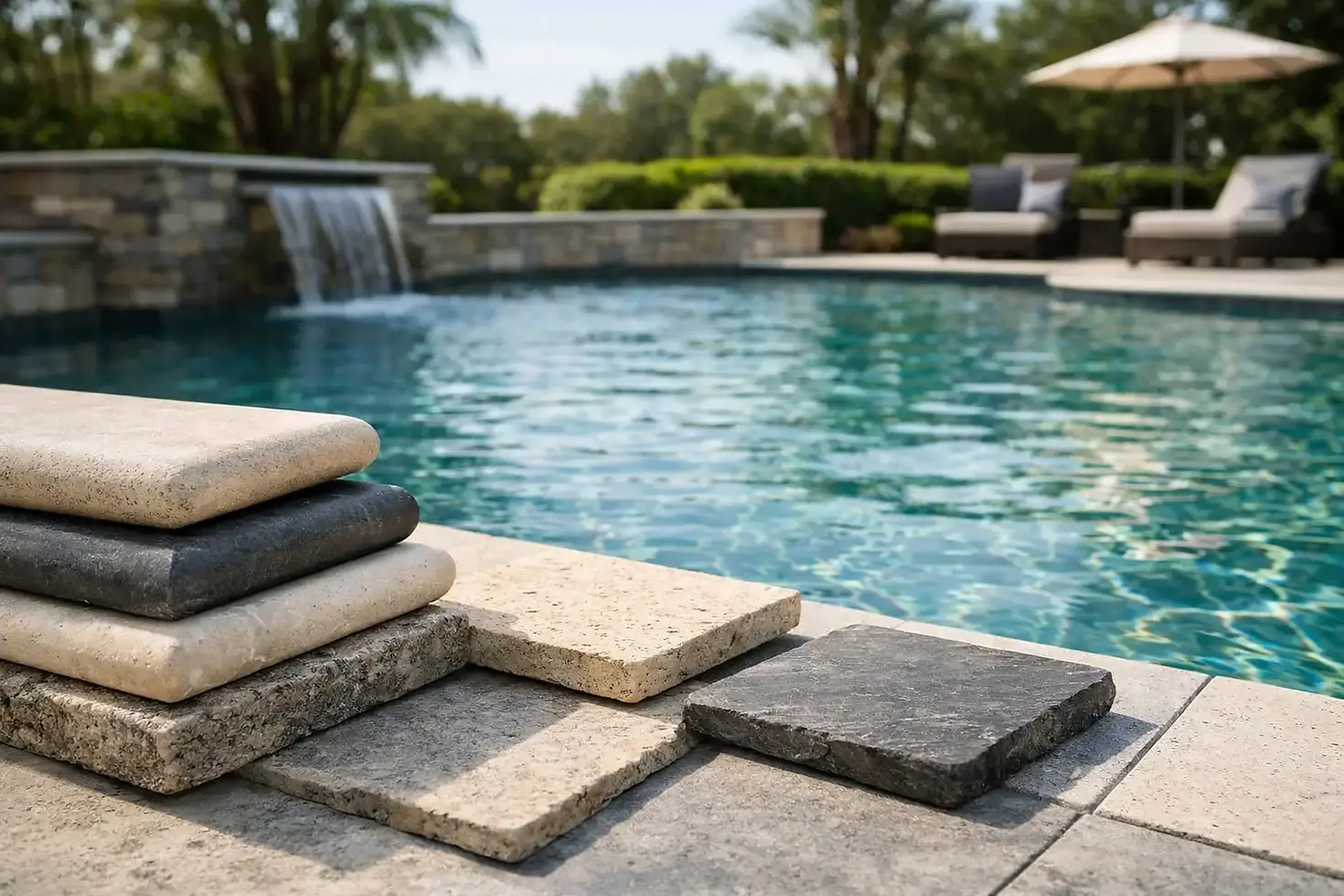
Pool Coping for Durable, Well-Supplied Projects
A pool edge is one of the first areas to show whether a project was specified with care. Pool coping must handle constant water exposure, bare-foot traffic, cleaning chemicals, heat, and the visual transition between the pool shell and surrounding deck. For villa developers, contractors, and stone distributors, it is not a minor finishing item. It is a material decision that affects safety, installation quality, maintenance expectations, and the overall value of the outdoor space.
Natural stone remains a strong choice for pools because it provides a substantial architectural finish while working naturally with terraces, walkways, façades, and landscape walls. The right selection, however, depends on more than color and price per square foot. Stone type, finish, edge profile, sizing, packaging, and supply consistency all need to be considered before the order is placed.
What Pool Coping Is Designed to Do
Pool coping is the cap installed along the top perimeter of a swimming pool. It finishes and protects the pool structure while creating a defined edge between the water and the deck. In practical terms, it helps direct splashed water away from the pool shell, covers the bond beam, and provides a secure surface for people entering, leaving, or sitting beside the pool.
The coping also establishes the visual line of the pool. A thin porcelain coping with a square edge produces a clean contemporary result. A tumbled travertine coping with a rounded bullnose gives a warmer, more traditional character. Neither is automatically better. The correct approach depends on the architecture, deck material, climate, expected use, and maintenance plan.
For commercial hospitality projects and high-use villas, coping should be evaluated as part of the complete pool surround rather than as an isolated product. Deck pavers, drainage, expansion joints, pool mosaics, and installation materials must work together. A premium stone cannot compensate for inadequate substrate preparation or poor water management.
Choosing Pool Coping Materials for Project Conditions
Travertine is widely specified around pools because its natural texture, light color options, and relatively cool surface performance suit outdoor living areas. Turkish travertine can be supplied in a broad range of finishes and formats, making it practical for matching coping to pavers, wall cladding, steps, and landscaping elements within one project palette.
For a more rustic or Mediterranean finish, tumbled travertine with eased or bullnose edges is often selected. It has natural variation and a softer appearance that works well on villas, resorts, and landscaped terraces. Filled and honed travertine can create a more refined look, although polished surfaces are generally not appropriate for exposed wet pool edges.
Limestone may be suitable where a quieter, more uniform visual appearance is required. Its suitability depends on the individual stone's density, absorption characteristics, and finish. A supplier should be able to provide clear information on the material being quoted rather than treating all limestone as the same product category.
Porcelain coping is a strong option for projects seeking calibrated dimensions, repeatable color, and a low-absorption surface. It is especially useful where the adjacent deck is porcelain or where the design calls for long, consistent lines. Its edge details and installation requirements differ from natural stone, so installers should work with approved setting materials and follow the product system requirements.
Granite and certain dense natural stones can also perform well in demanding environments, particularly when a project needs higher density and a more formal appearance. The trade-off may be a hotter surface in direct sun, a different visual relationship with the pavers, or higher material and fabrication costs.
The selection should also account for the pool environment. Saltwater pools, heavily chlorinated pools, freeze-thaw climates, and coastal settings place different demands on materials and installation assemblies. A stone that performs well in a sheltered residential pool in a warm climate may require a different specification for an exposed project with winter freezing conditions.
Surface Finish Matters as Much as Stone Type
Slip resistance and comfort underfoot come primarily from the selected finish. Tumbled, brushed, sandblasted, flamed, and naturally textured finishes can provide better grip than polished surfaces. The exact result varies by material, texture depth, wetness, and site use, so samples should be checked under realistic project conditions.
A finish should not be chosen only from a showroom sample. View it in sunlight, wet it, walk on it with bare feet, and compare it to the expected deck finish. This is particularly relevant for large hospitality pools, where varied user traffic and regular cleaning increase the importance of surface performance.
Edge Profiles, Sizes, and Details That Affect Installation
A coping profile must suit both the project design and the construction method. The most common options are bullnose, drop-face, eased edge, and square edge. A bullnose creates a rounded, comfortable edge and is frequently used with travertine. Drop-face coping gives the impression of a thicker solid stone piece by extending material down the pool wall. Eased and square edges support more contemporary designs but require accurate cutting and careful alignment.
Standard straight pieces are efficient for long pool runs, but corners, radiuses, stair sections, skimmer zones, and overflow details require early planning. Ordering only straight coping and expecting the installer to solve every transition on site can lead to inconsistent joints, unnecessary waste, and delayed work.
Dimensions should be coordinated with the deck layout. Common coping widths may work well for a simple rectangular pool, while a custom-width piece can reduce narrow cuts or awkward joints around a large-format paver design. Thickness must also be compatible with the bedding system and surrounding finished levels.
A slight fall away from the pool is generally used to help manage splash water and protect the deck assembly. The precise slope, drainage route, and joint design should be set by the project designer and installer according to site conditions and applicable requirements. Water should not be allowed to sit repeatedly at the coping joints or drain toward building walls.
Joints Are a Performance Detail, Not an Afterthought
Movement joints between the pool shell, coping, and deck are essential because these elements can move differently with temperature changes, settlement, and moisture. Rigidly bridging all areas with mortar or grout can increase the risk of cracking or debonding.
Joint width and sealant selection should follow the installation system and local conditions. On natural stone projects, the installer must also select adhesives, grouts, and sealants that are suitable for the stone and will not cause staining, moisture issues, or edge discoloration. This is one reason material procurement should include installation accessories, not just stone pieces.
Supplying Natural Stone Coping With Greater Control
For distributors and project buyers, a pool coping order should be controlled at source. Natural stone has inherent variation in shade, veining, pore structure, and texture. That character is valuable, but it needs to be managed through consistent selection, production checks, and realistic sample approval.
The purchase specification should identify the stone, finish, edge profile, dimensions, thickness tolerance, corner requirements, packing method, and expected quantity allowance. It should also clarify whether the order includes matching pavers, steps, wall caps, or other outdoor materials. Combining related products from the same supply program helps maintain a coherent result across the project.
Packaging matters in export supply. Coping pieces have finished edges that require protection during handling and transport. Clear labeling by size, profile, and location makes receiving and installation more efficient, especially when shipments serve large villas, hotel developments, or multiple project phases. For international orders, dependable documentation, container planning, and shipment coordination are as important as the product itself.
Experienced Turkish sourcing can offer significant advantages where a project needs travertine pavers, coping, mosaics, cladding, and installation-related materials under coordinated procurement. ITTIHAD TRADE supports this type of project supply with natural stone knowledge, export experience, and practical attention to material availability.
Inspection Before Installation Protects the Schedule
Coping should be inspected before it is installed, not after the perimeter is complete. The installer should dry-lay representative sections to check color distribution, edge alignment, dimensions, corners, and transitions to steps or water features. Natural variation should be blended across the pool perimeter rather than concentrated in one section.
Any pieces with transit damage, unacceptable visual defects, or incorrect sizing should be identified early. Once stone is cut and fixed into the installation, replacements become more difficult and can interrupt the project schedule. Keeping a reasonable quantity of spare material is prudent for future repairs, particularly for custom profiles or natural stone selections with noticeable variation.
Sealing may be considered for certain natural stones, but it is not a substitute for sound material selection or correct installation. The appropriate sealer depends on the stone, finish, exposure, and desired appearance. Test applications are advisable, since some treatments can alter color or reduce the natural feel of the surface.
A well-specified coping package gives the pool a durable finished edge and gives the contractor fewer decisions to solve under installation pressure. Start with the pool environment, coordinate every adjoining material, and secure supply details before production begins. That discipline is what turns a good-looking sample into a pool perimeter that performs for years.
To display the Widget on your site, open Blogs Products Upsell Settings Panel, then open the Dashboard & add Products to your Blog Posts. Within the Editor you will only see a preview of the Widget, the associated Products for this Post will display on your Live Site.
Start your 14 days Free Trial to activate products for more than one post.
icon above or open Settings panel.
Please click on the


Comments